
11-12 June 2026
Erasmus University Rotterdam
Erasmus University Rotterdam
| Home | CfP | Programme | Directions | Book | LAIR 2023 |
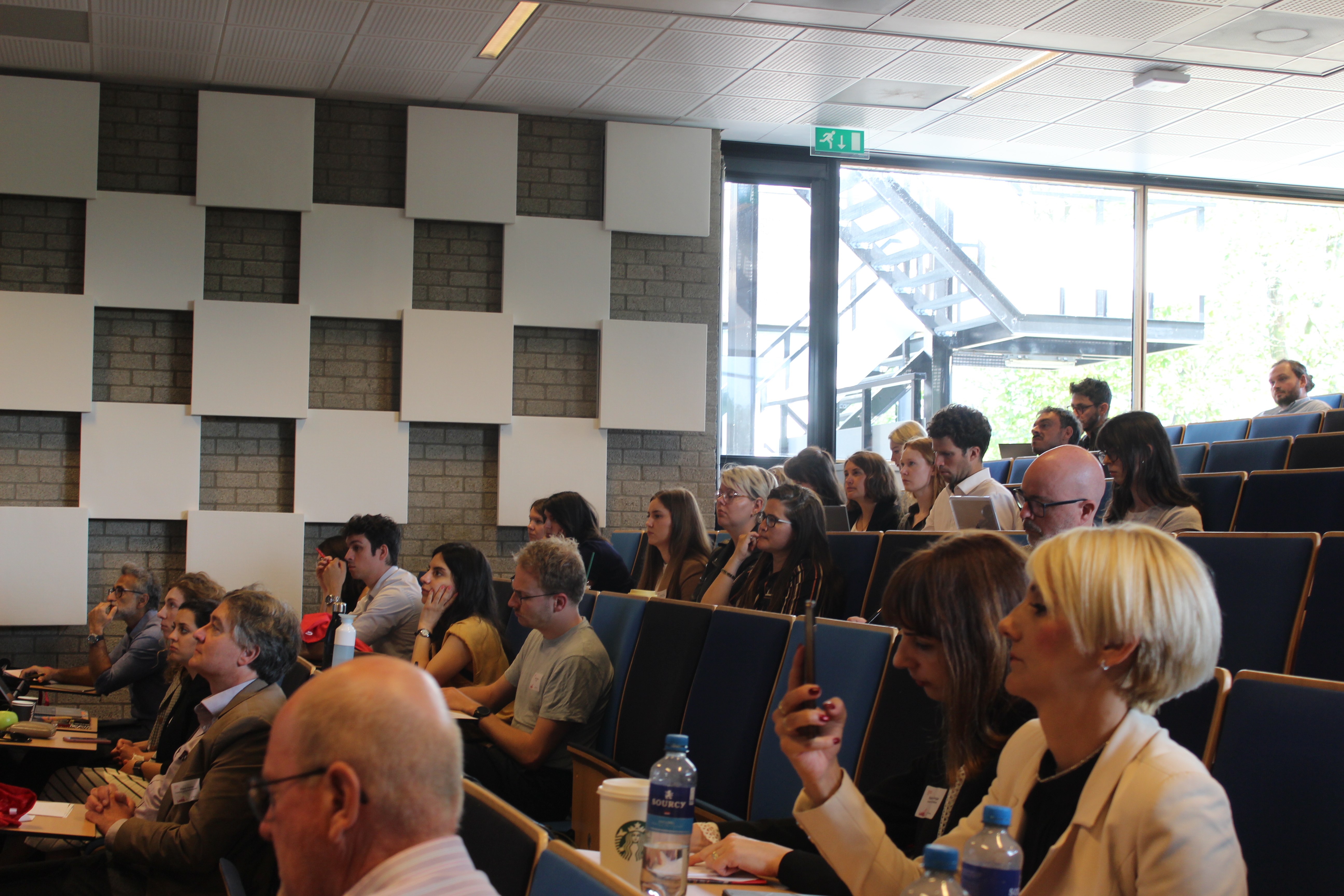
In June 2023, the first Law, AI and Regulation (LAIR) conference took place at Erasmus University Rotterdam. Supported by the Rebalancing Public & Private Interests and Erasmus Centre of Empirical Legal Studies, and Jean Monnet Centre of Excellence Digital Governance, this two-day event sought to explore the challenges and opportunities presented by the rapidly evolving landscape of AI and its legal implications. The presentations consisted of 2 keynotes by Gillian Hadfield and Eduard Fosch-Villaronga, 6 panels with 22 speakers, that were all ending with a discussion session in which around 40 participants actively engaged in each day.
|
|
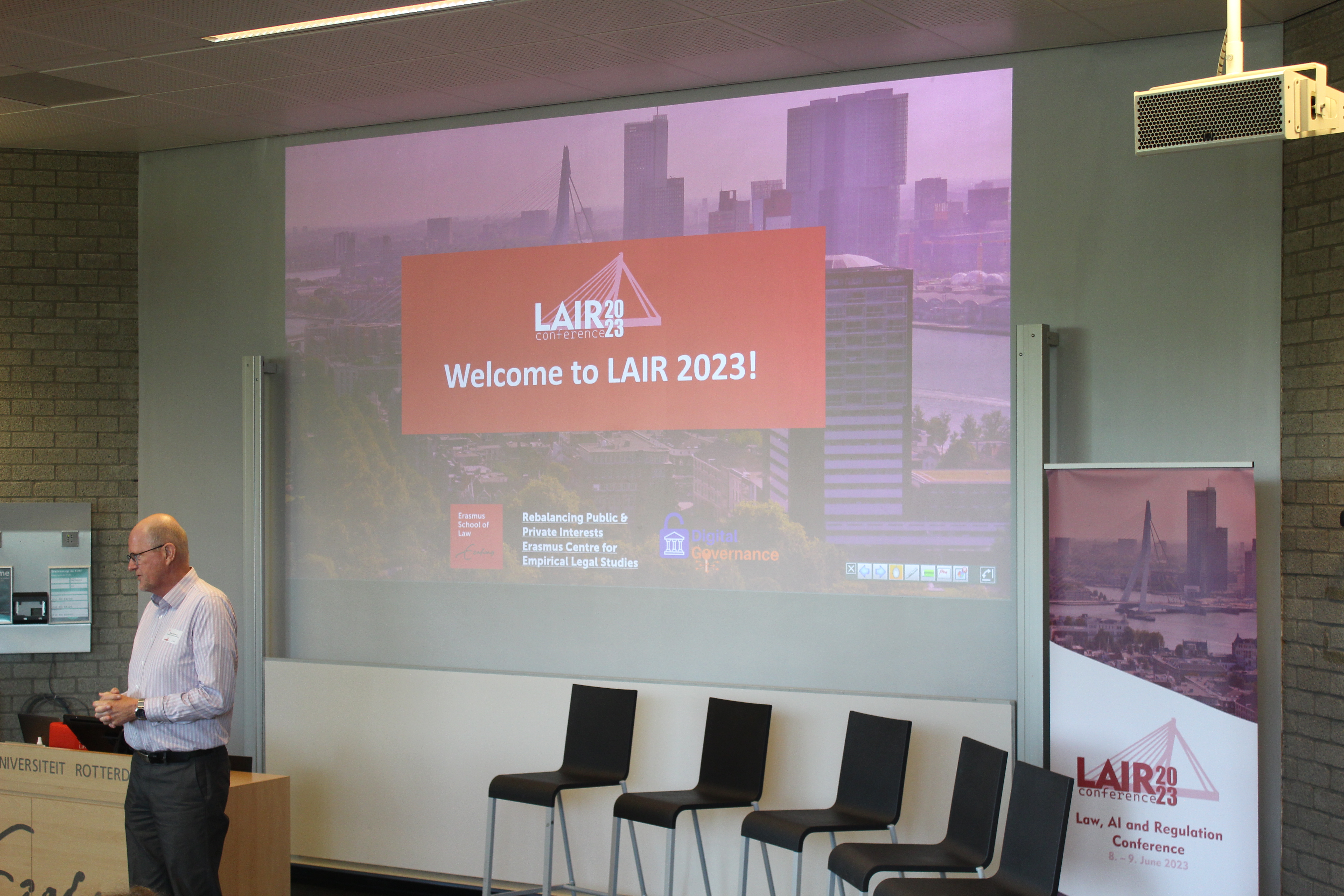
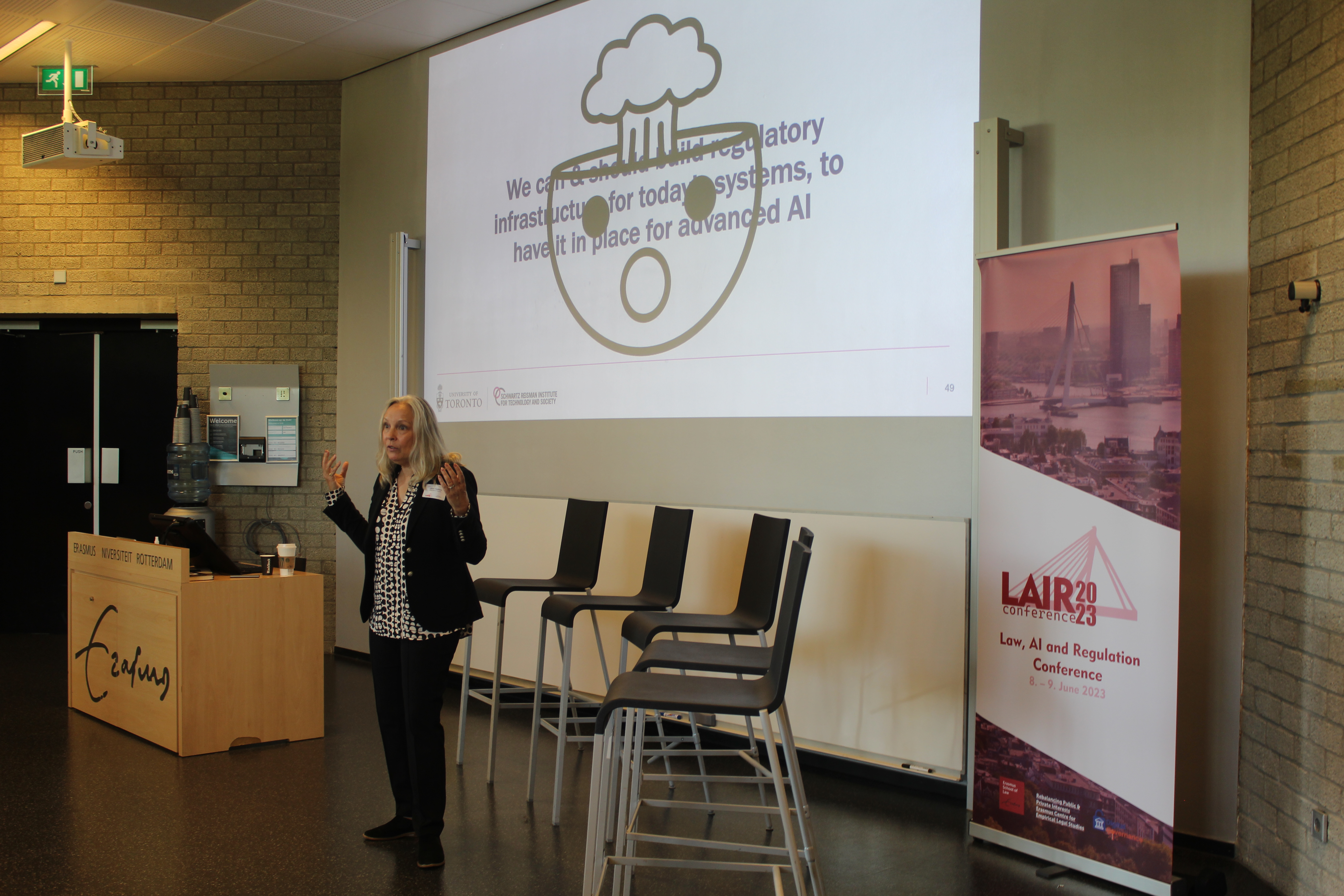
Evert Stamhuis (Erasmus University) officially opened the LAIR conference with some welcoming remarks. Prof. Gillian Hadfield, the Schwartz Reisman Chair in Technology and Society at the University of Toronto, delivered a thought-provoking keynote speech about the future of AI governance that set the tone for the conference. Prof. Hadfield emphasized the pressing need to build institutions that ensure that AI promotes human welfare.
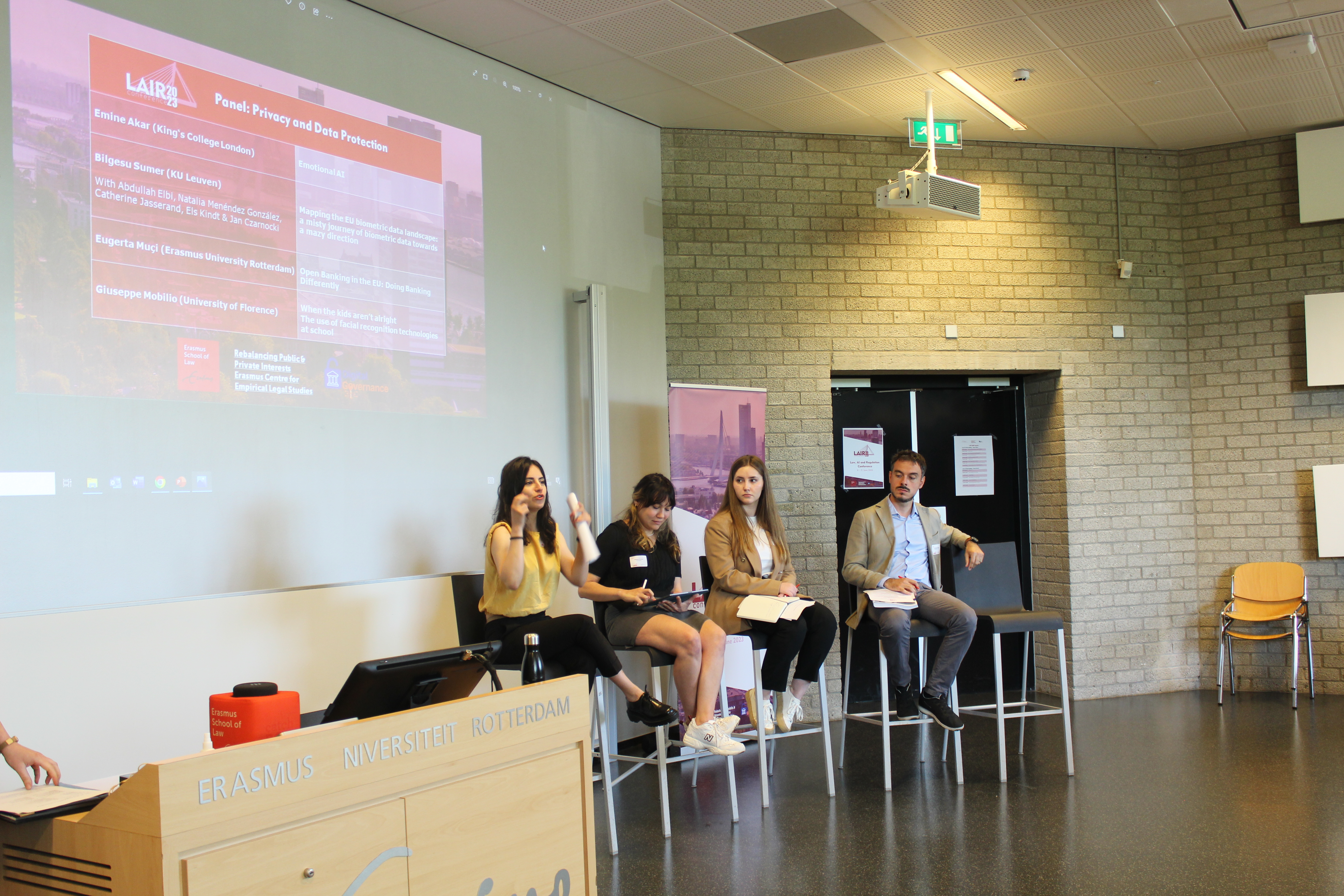
Following the keynote speech, the conference proceeded with a diverse range of panels, after which participants engaged in lively discussions. The first panel on Privacy and Data Protection touched upon the challenges that AI poses for data protection and privacy from different perspectives. Emine Akar (King's College London) discussed the implications of using AI to extract data about a persons emotional state, and posed the question if there is a theoretical need of “emotional privacy”. Bilgesu Sumer (KU Leuven) went on to map out the scattered regulatory landscape for the use of biometric applications. Eugerta Muci (Erasmus University) presented her work on the empirical and doctrinal rationale behind Open Banking, along with the implications of it for privacy, data protection and consumer protection. Giuseppe Mobilio (University of Florence) focused on the impact of facial recognition technologies on children, and posed the question if there is a special regulation necessary for these kinds of technologies.
|
|
The second panel titled ''Accountability and AI'' touched upon questions of the explainability, contestability and liability of AI systems. Alejandra Bringas Comenarejo (University of Southampton) talked about the synthesis of both legal and technical standards for explainable AI, by focusing on machine learning models. The presentation was followed by Lucas Costas dos Anjos (Sciences Po), who presented his work on the apparent legal inscrutability of algorithms under current law, integrating the technical, regulatory and judicial dimensions related to the right to explanation. Ljubisa Metikos (University of Amsterdam) analysed the right to explanation in the context of AI used in judicial decision-making. Jan van Staalduinen (Leiden University) was the last presenter of the panel, by critically reflecting on causation problems that arise from the use of AI, focusing on both negligence and strict liability rules.
The last panel of the first day with the title “Regulation by Design” addressed the challenges of building technologies and systems that are value-based and socially good, which ended with a discussion on the relation between design and regulatory objectives. Leonie Reins (Erasmus University Rotterdam) opened the panel by talking about the by-design regulatory approach for biotechnologies, and the benefits and disadvantages of integrating the Safe and Sustainable by Design concept. Sem Nouws (TU Delft) went on to present a socio-legal framework that combined the concept of rule of law with the scientific practice of System Safety. Vicky and Kelly Breemen (Utrecht University) talked about their work on cultural AI, and explored value-based regulation by design for its use in galleries, libraries, archives and museums. Mitja Kovac (University of Ljubljana) discussed the interaction between public and private actors in the design and development of AI.
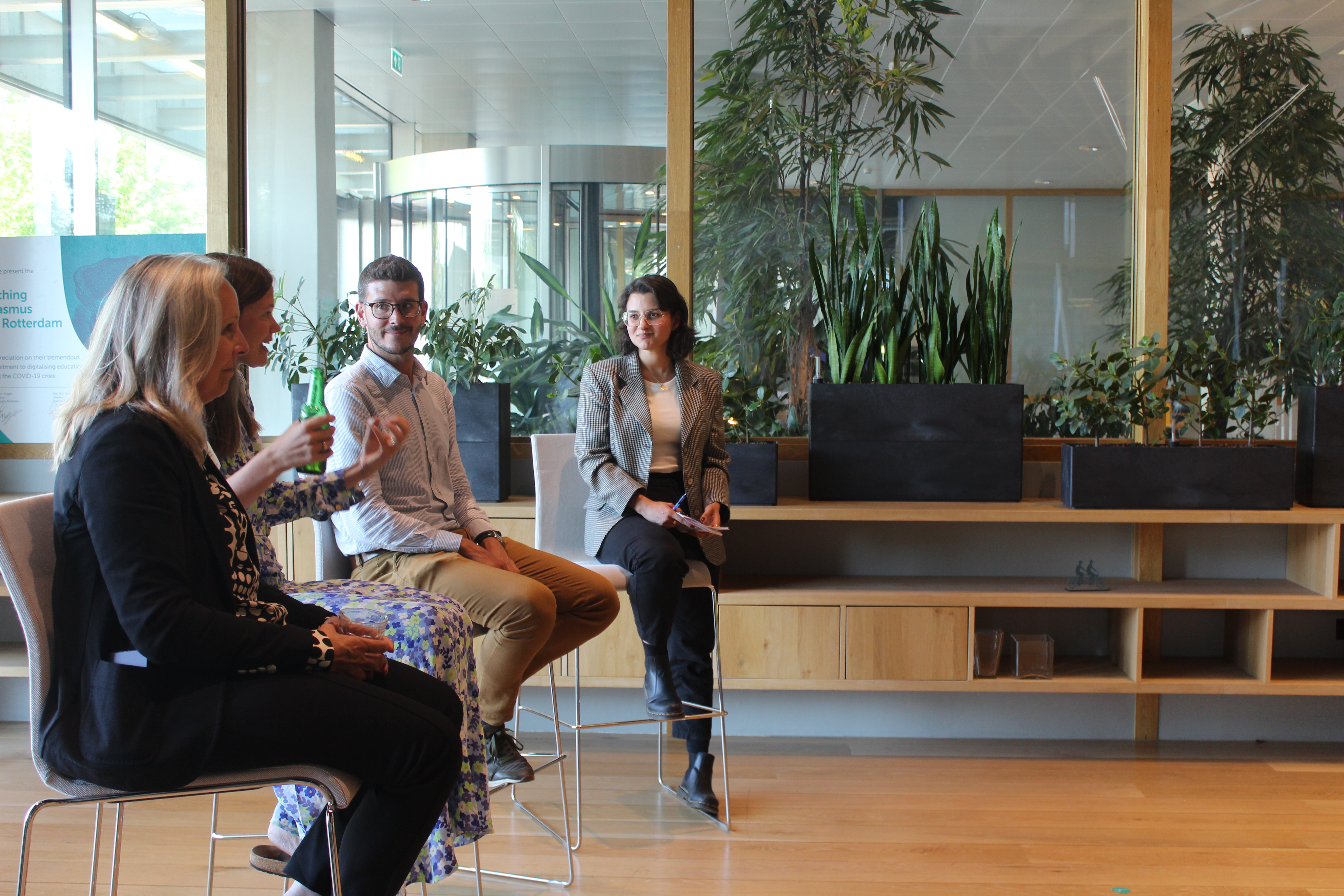
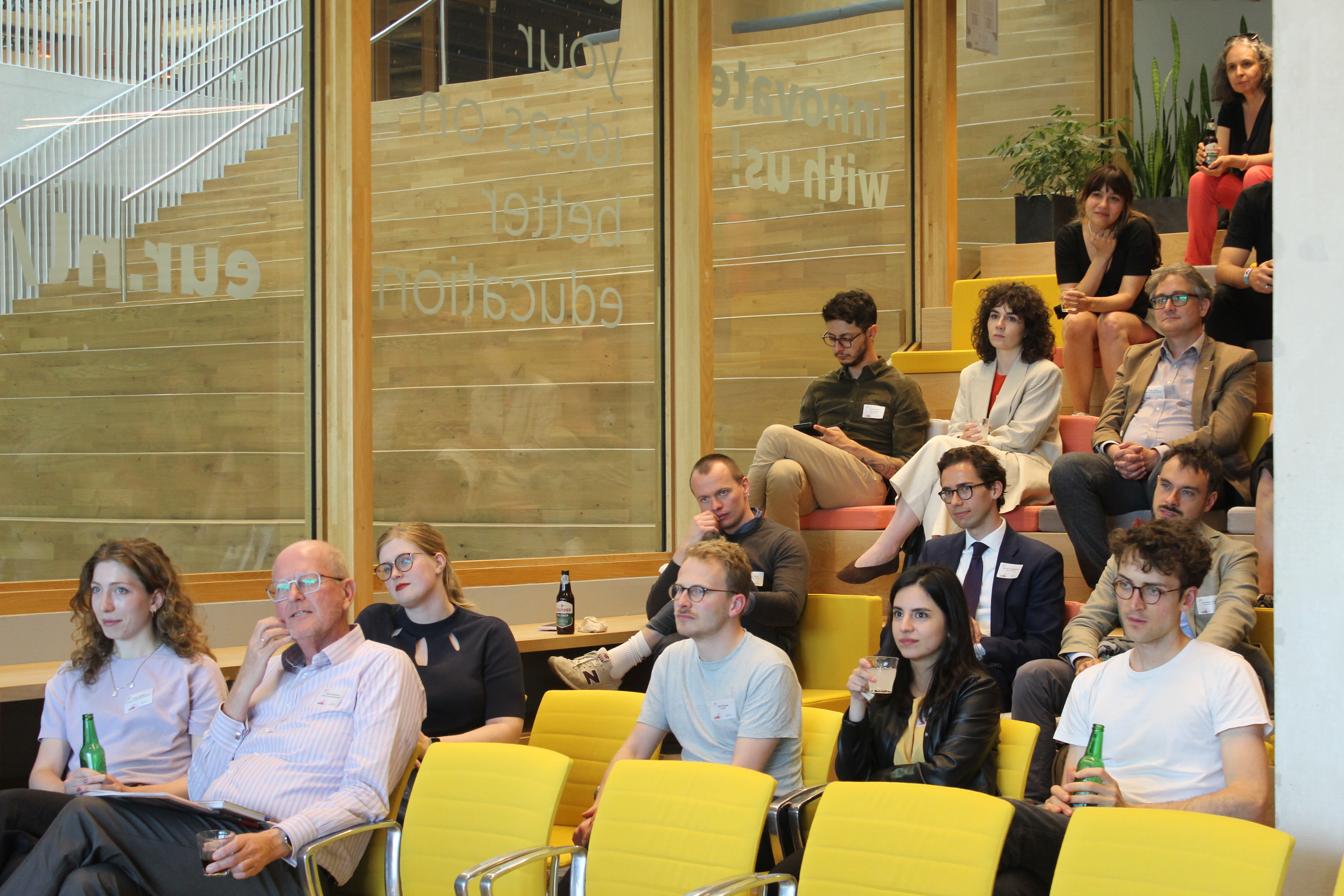
The first day ended with the second keynote of the day, which was delivered by Prof. Eduard Fosch-Villaronga (Leiden University) who talked about his current research project on data-driven regulatory models for robot tech, which was followed by a lively discussion. In addition to the academic sessions, the conference included a Young Scholars event, in which Prof. Gillian Hadfield, Prof. Leonie Reins and Prof. Eduard Fosch-Villaronga shared some of their personal experiences in working in academia. This interactive and informal session provided a valuable opportunity for participants to engage in a discussion about what failures actually mean, and the drawbacks but also opportunities within an academic career. The session aimed to accommodate and facilitate the involvement of young researchers in academia and to foster an active PhD community across different universities.
|
|
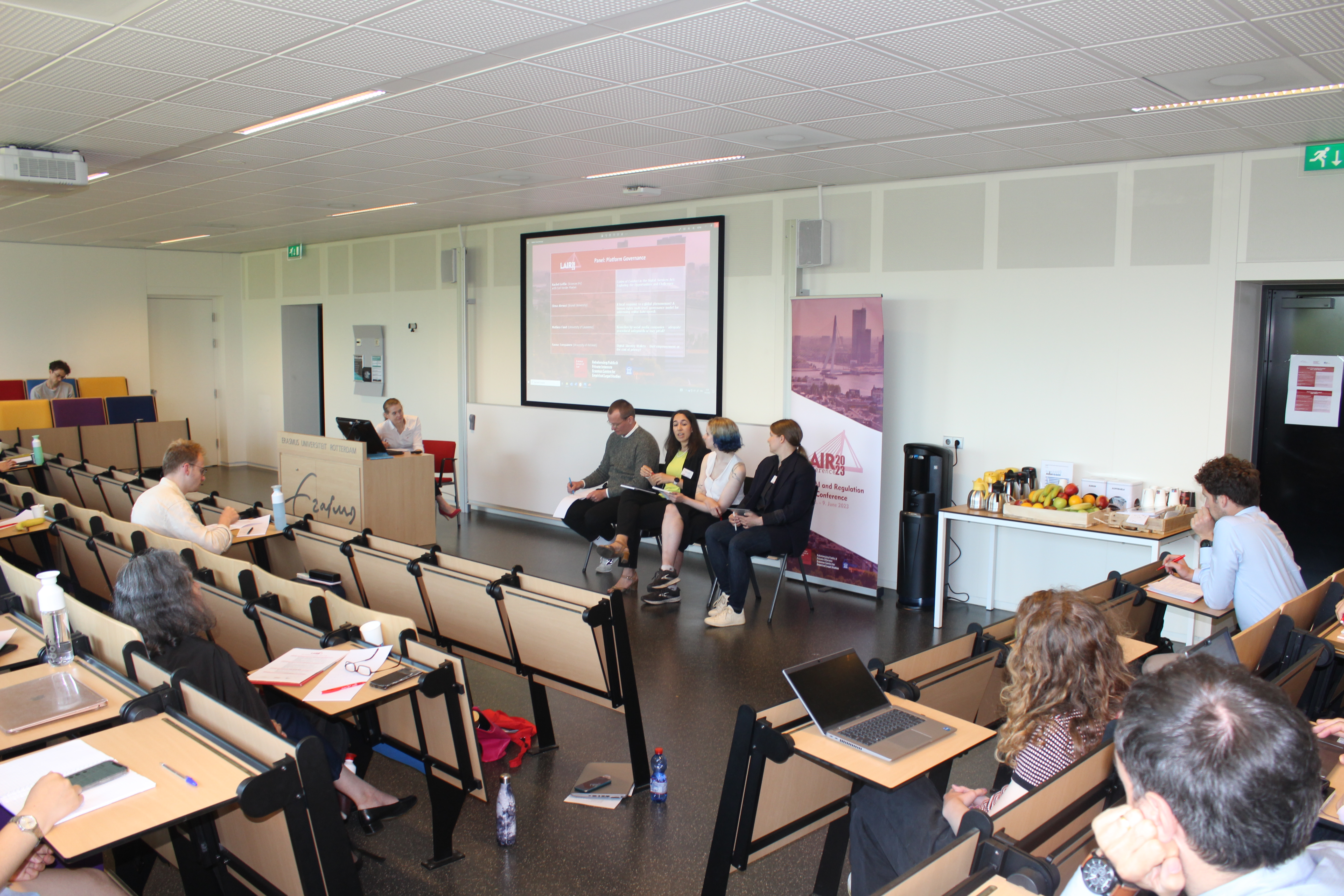
The second day of the LAIR Conference promised further deep dives into the intricacies of AI regulation. After the day was officially opened by Koen Swinnen (Erasmus University), the panel ''Platform Governance'' took place. Rachel Griffin (Sciences Po) started the panel by exploring the opportunities and challenges of codes of conduct in the Digital Services Act. Mathieu Fasel (Lausanne University) talked about the remedies pursued by social media companies in content moderation, and questioning their adequacy and their role within broader government frameworks. Sanna Toropainen (Helsinki University) provided an interdisciplinary theoretical perspective on the issue of empowerment and control in the context of the European Digital Identity Regulation.
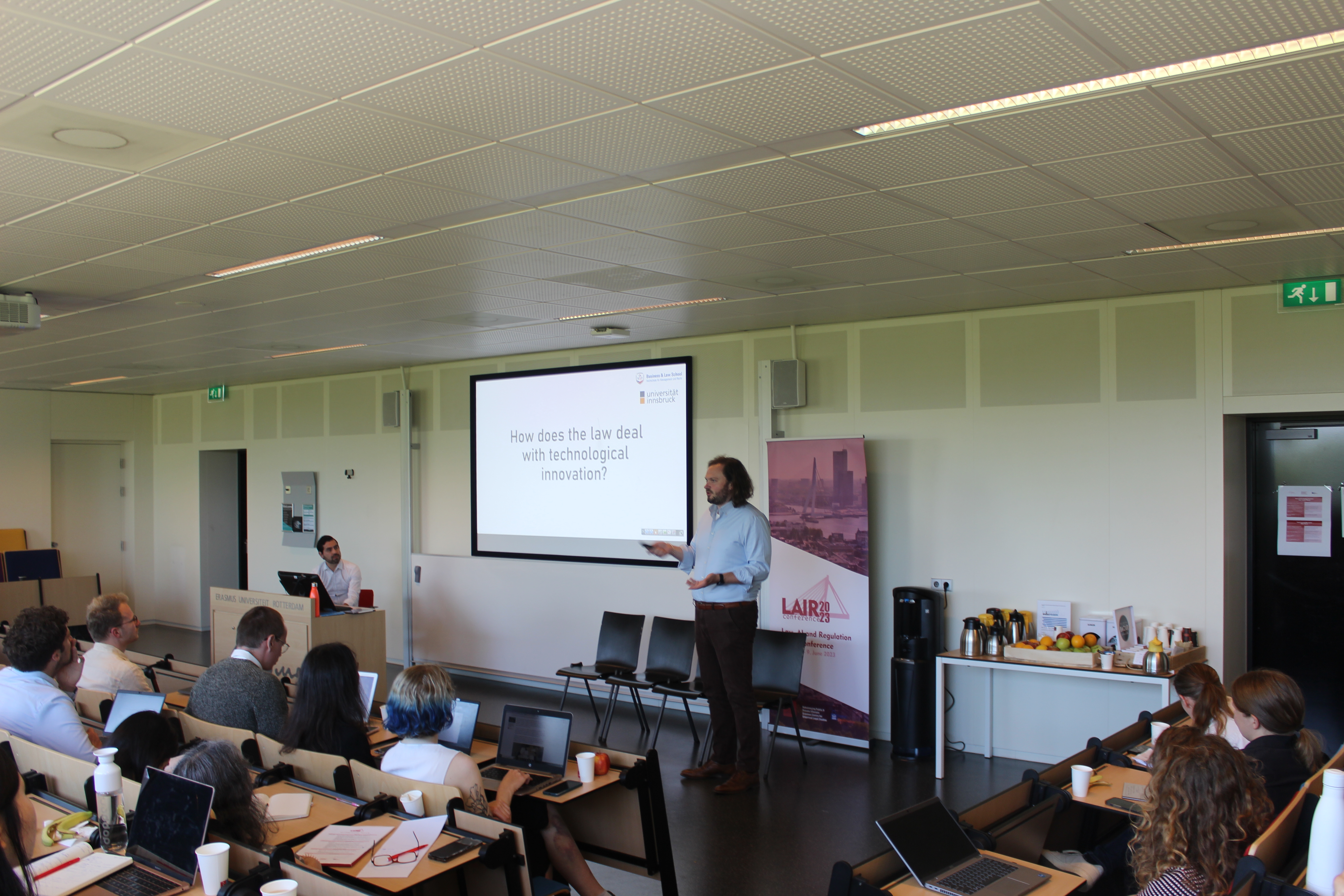
The panel ''Modes of AI Governance'' comprised interdisciplinary approaches to the question of AI governance in various jurisdictions. Jamelia M Anderson-Princen (Tilburg University) presented her work on transaction cost theory and the multigroup path model to investigate how financial institutions in various jurisdictions adapt their governance structures to manage cloud outsourcing risks. The presentation by Helen Hayes (McGill University) focused on AIDA, the Canadian Artificial Intelligence and Data Act, and the role of responsible and participatory design for AI systems. Christoph Koenig (BSP Business&Law School) offered an account of the relation between law and technology, advancing a contextualized approach for how the law should respond to technological advancements.
|
|
The panel ''Governance of AI in the EU'' focused on the governance of AI in the EU. Brenda Espinoza (Tilburg University) presented work on the context of AI-powered local self-managed electricity systems. Alexis Galan (Bonn University) explored in his presentation the proposed AI act and the potential weaknesses in its regulatory mechanisms. Anna Schmitz (Fraunhofer Institute) presented a framework that helps to evaluate the readiness of standards for their use in AI governance, as envisioned for instance in the AI act. After a stimulating discussion, the conference was officially closed by Klaus Heine (Erasmus University).
The LAIR Conference 2023 offered an intellectually stimulating platform for thought leaders and practitioners to grapple with the evolving dynamics of law, AI, and regulation. Over the course of two days, the event fostered a rich exchange of ideas, insights, and experiences, pushing the boundaries of knowledge and setting the stage for future collaborations. As the conference progressed, it became increasingly clear that an interdisciplinary and global approach is crucial to ensure the effective and responsible integration of AI into our legal frameworks.